AI Search & Strategy
What Is GEO? A Business Guide to AI Search
Understand AI search without the hype—and focus on the information your customers actually need.
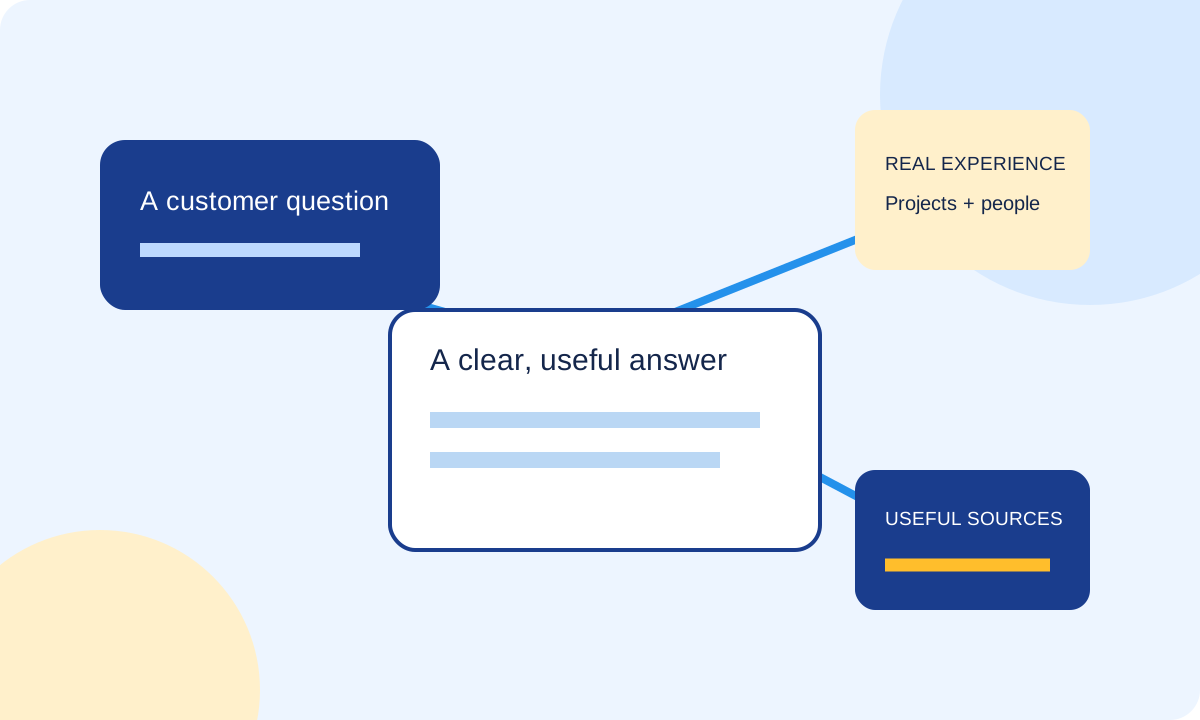
Customers can research a business through search results, maps, conversational tools, and AI-generated summaries. That has introduced new marketing terms: Generative Engine Optimization, or GEO, and Answer Engine Optimization, or AEO. For a business, the useful question is simpler: does your website clearly explain what you do, support its claims, and help someone make a decision?
GEO, AEO, and SEO: what is the difference?
GEO commonly describes work intended to improve how content is discovered and represented in generative search experiences. AEO emphasizes answering customer questions clearly. SEO covers the broader work of making a website accessible, understandable, and useful in organic search.
These labels overlap. They are not three separate websites to build or three guaranteed routes to leads. Different search and AI products use different systems, and the answers they produce can change. A practical plan improves the underlying information instead of chasing an imagined universal AI scoring formula.
1. Explain your business clearly and consistently
Write down the facts a new customer needs: business name, main services, contact information, actual service coverage, and who is responsible for the work. Make those facts easy to find on the relevant pages. Resolve contradictions between your website and business listings.
For a contractor, explain whether you handle residential, commercial, or both types of work. For a professional practice, explain the kinds of appointments or projects you accept. A visitor should not have to infer the service from a decorative headline.
Describe real locations and credentials accurately. Do not add an office address in a town simply because you want customers there. If a qualification has a limited scope or expiration date, keep that context with the claim.
2. Answer real questions before adding more copy
Use questions from estimate calls, customer emails, and your team’s everyday conversations. Answer directly, then explain the conditions that affect the answer. A short answer is helpful when it is accurate; removing important qualifications can make it misleading.
For example: “Can I keep my existing domain when you redesign my site?” A useful answer explains that the domain can usually stay, then identifies access, hosting, and email coordination as part of planning. That tells a customer more than a broad promise of a seamless experience.
Build FAQs around the actual service page. Pricing approach, project preparation, timelines, ownership, maintenance, and coverage are often more useful than generic questions written only to repeat keywords. Keep the answer visible to visitors, not hidden exclusively in schema.
3. Support the story with firsthand evidence
Explain a real project’s starting problem, your role, the work completed, and what can be supported about the outcome. Use approved project photos and accurate captions. Distinguish a measured result from an intended benefit.
A business owner can often supply information a generic writing tool cannot: why a customer chose one option, what complicated a project, and what the team learned. That detail makes the page useful to a reader evaluating similar work. Review generated drafts carefully rather than treating their confident wording as evidence.
4. Keep the technical foundation sound
Pages need accessible content, sensible internal links, and an indexable production setup. Structured data can describe the organization, services, and articles when it matches the visible page. It should not contain invented ratings, certifications, locations, or accomplishments.
Google states that its AI search features do not require special schema markup. Ordinary search fundamentals remain relevant. Structured data is a way to describe content accurately, not a promise of an AI citation. A staging site should remain excluded from indexing until it is ready to launch.
What should a business measure?
Track business outcomes alongside available search reporting: relevant inquiries, service interest, and the quality of conversations. Ask new customers how they found you when practical. Review patterns over time rather than treating one AI-generated answer as a stable ranking report.
A sensible first month might include correcting inconsistent information, improving two priority service pages, publishing one useful project example, and checking inquiry tracking. Those are concrete improvements whether the next visitor arrives from a traditional result or an AI-assisted search.
Build on what makes your business credible
Our AI Search Optimization service works alongside SEO & Local Search. The goal is a clear, connected digital presence with practical measurement. Meet Kris Hawley to learn more about the business experience behind that approach.
Further reading

About Kris Hawley
Founder of Digital Marketing Divas, bringing firsthand business experience to website design and digital marketing. Meet Kris ↗